This is an animal study. Preclinical means the work was done in animals, before any testing in people. The figures below describe what happened in that model — they are not effects a person can expect. What preclinical means →
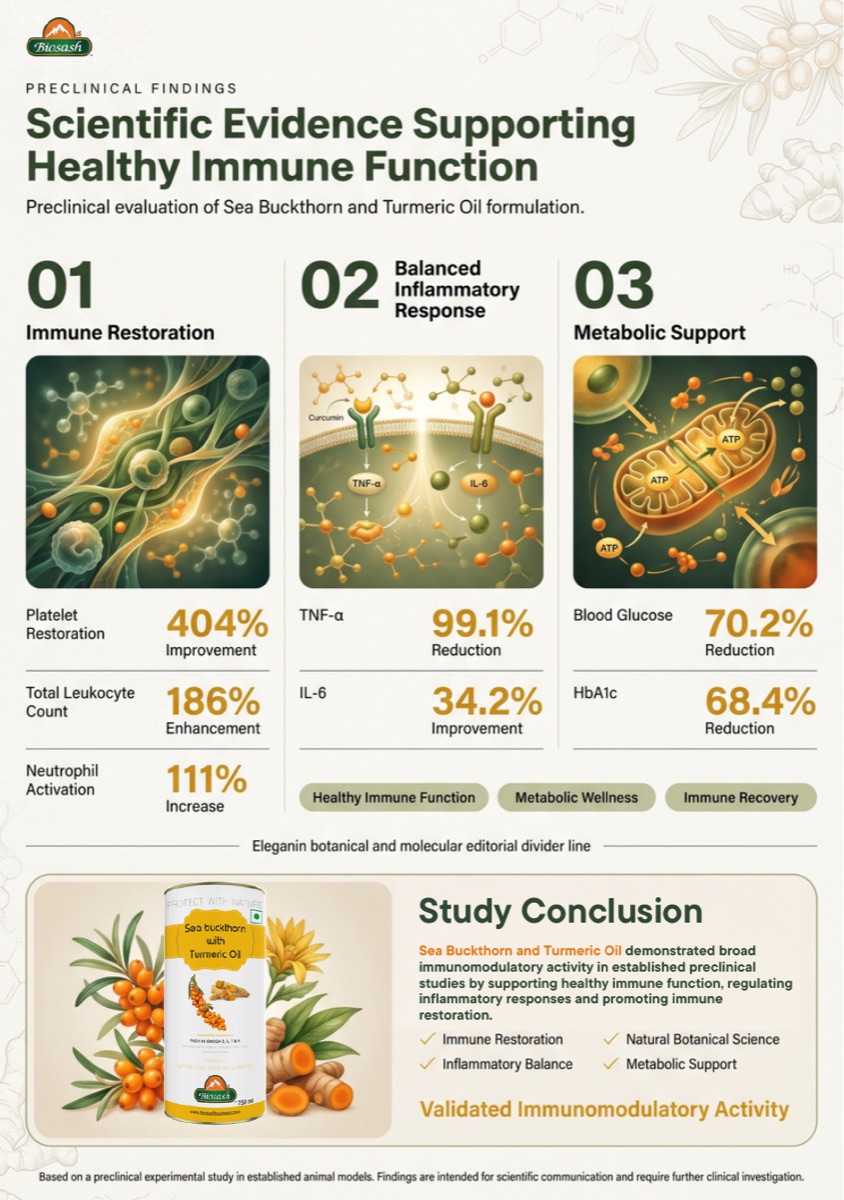
The headline figure
99.1%
reduction in TNF-α, the principal inflammatory marker measured.
The model
Established preclinical models in animals. The artwork does not say which immune suppression or challenge was used, which matters more here than in the other four — see below.
What was measured
Blood cell counts, inflammatory cytokines, and glucose markers.
The findings
| Platelet restoration | 404% |
| Total leukocyte count | 186% |
| Neutrophil activation | 111% |
| TNF-α (reduction) | 99.1% |
| Blood glucose (reduction) | 70.2% |
| HbA1c (reduction) | 68.4% |
| IL-6 | 34.2% |
How to read them
- The very large percentages — are the reason to read this one carefully. A 404% restoration of platelets is a recovery figure — it describes counts coming back up from a suppressed baseline in an induced model, not a healthy person gaining four times the platelets. Read them as "how far the model recovered", not "what this does to you".
- TNF-α and IL-6 — inflammatory signalling molecules. Both moving is the basis for the "balanced inflammatory response" reading.
- The glucose figures — sit oddly in an immunity study, and the artwork does not explain why they were measured. Worth asking about.
The study's own conclusion
Broad immunomodulatory activity in established preclinical studies, supporting healthy immune function, regulating inflammatory responses and promoting immune restoration.
What the study does not say
Worth reading alongside the findings. The published artwork does not state:
- the species and strain used
- how many animals were in each group
- the dose given, and for how long
- which institution ran the work
- whether it has been published or peer-reviewed
That is ordinary for manufacturer-published research and it is not a reason to dismiss the work. It is a reason to call it what it is: internal preclinical evaluation, not independent clinical evidence.
The published artwork
Biosash publishes this study as two images. Everything above is transcribed from them.

The product