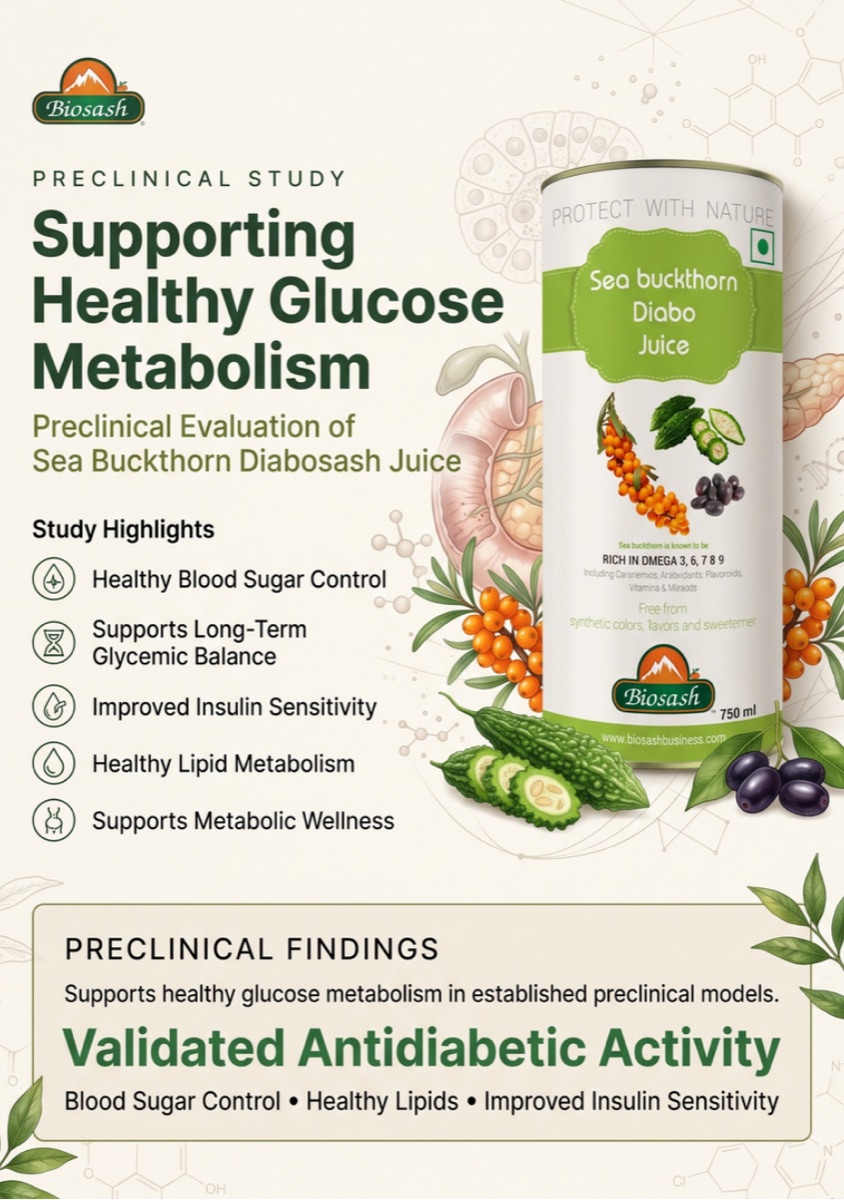
This is an animal study. Preclinical means the work was done in animals, before any testing in people. The figures below describe what happened in that model — they are not effects a person can expect. What preclinical means →
The headline figure
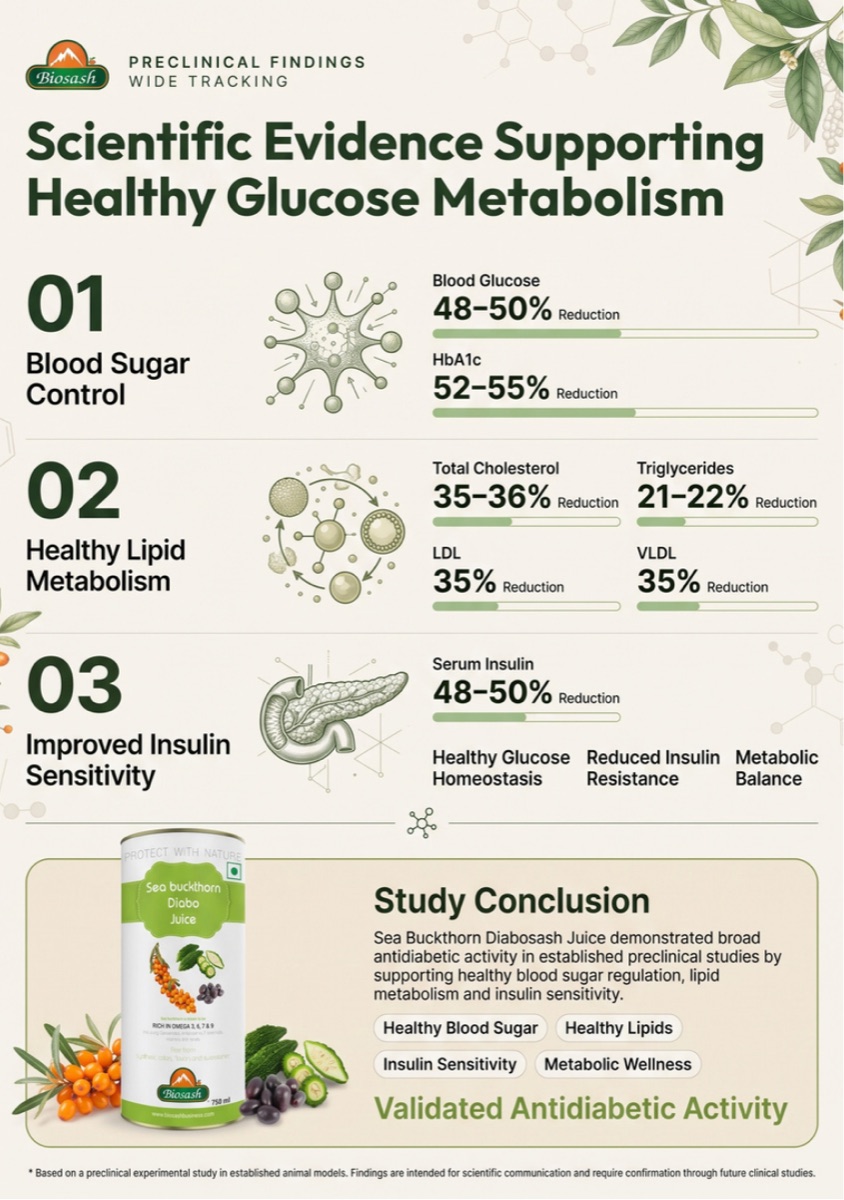
48–50%
reduction in blood glucose in the model.
The model
Established preclinical diabetes models in animals. The infographic does not name which induction method was used.
What was measured
Blood glucose and HbA1c, the lipid panel, and serum insulin.
Read this before the numbers. This is the study on this site most likely to be misread. It was run in animals with induced diabetes. It is not evidence that a juice manages diabetes in a person, and nobody should change medication or monitoring because of it.
The findings
| HbA1c | 52–55% |
| Blood glucose | 48–50% |
| Serum insulin | 48–50% |
| Total cholesterol | 35–36% |
| LDL | 35% |
| VLDL | 35% |
| Triglycerides | 21–22% |
How to read them
- HbA1c — reflects average blood glucose over weeks rather than at a moment, so it is the more meaningful of the two glucose figures.
- Serum insulin falling alongside glucose — is the part worth understanding. On its own, less insulin sounds like the wrong direction. Falling together with glucose is the signature of improved insulin sensitivity — the same job being done with less hormone — which is how the study reads it.
The study's own conclusion
Broad antidiabetic activity in established preclinical studies, supporting healthy blood sugar regulation, lipid metabolism and insulin sensitivity.
What the study does not say
Worth reading alongside the findings. The published artwork does not state:
- the species and strain used
- how many animals were in each group
- the dose given, and for how long
- which institution ran the work
- whether it has been published or peer-reviewed
That is ordinary for manufacturer-published research and it is not a reason to dismiss the work. It is a reason to call it what it is: internal preclinical evaluation, not independent clinical evidence.
The published artwork
Biosash publishes this study as two images. Everything above is transcribed from them.
The product