Leh berry and sea buckthorn are the same fruit
If you have seen "Leh berry" on a bottle in India and "sea buckthorn" on a bottle elsewhere, you have seen the same plant under two names. The botanical name is Hippophae rhamnoides. Leh berry is a retail name, taken from the town in Ladakh where most of India's production is based.
In Ladakhi the plant is tsermang or chharma. In Hindi it is usually just transliterated. Across the wider region it has a dozen more names, which is what happens to a plant that grows across half of Eurasia and was never traded internationally.
Why the Indian name is a place
Sea buckthorn grows wild across Ladakh, Lahaul-Spiti, Kinnaur, upper Uttarakhand and parts of Sikkim, mostly between 2,500 and 4,500 metres. It has grown there for as long as there are records — but there was no industry built on it in India until 2005, when the first processing plant opened in Leh.
So the fruit reached Indian shelves from one place, at one moment, and the place stuck to the name. That is also why "Leh berry" carries an implication of provenance that "sea buckthorn" does not: it is saying where the fruit came from.
Is Leh berry juice different from sea buckthorn juice?
Not as a rule. Both names cover the same species, and what actually differs between two bottles is the things that always differ — pulp percentage, whether it was cold pressed, whether sugar was added, and where the fruit was grown and how far it travelled before it was pressed.
Judge a bottle on those, not on which of the two names is printed on it. The buying guide works through what to look for.
Where the fruit comes from, and where the product is made
Worth separating, because they are not the same place and the pack says so. Biosash's berries are sourced from Ladakh. The products are manufactured in Himachal Pradesh — at Shiva Ecological in Sundernagar, Mandi, exclusively for Biosash.
That arrangement is ordinary: a brand sources fruit from where it grows and has it made at a licensed facility. What matters is that both are declared. An Indian pack carries two FSSAI numbers for exactly this reason, one for the manufacturer and one for the marketer, and a pack showing only the marketer's is the one worth asking about.
So when a label says Leh berry, read it as a statement about where the fruit grew — which is the part that actually varies between brands.
The DRDO connection
India's interest in this berry was not originally commercial. The Defence Research and Development Organisation's high-altitude laboratory at Leh has worked on sea buckthorn for decades, driven by the practical question of nutrition and recovery for troops posted at altitude. That work is a large part of why the plant is known in India at all.
The range
Leh berry products from Biosash
Made from Ladakh-grown fruit — the plain juice, the two oils, and the formulations built on them.
Every product-
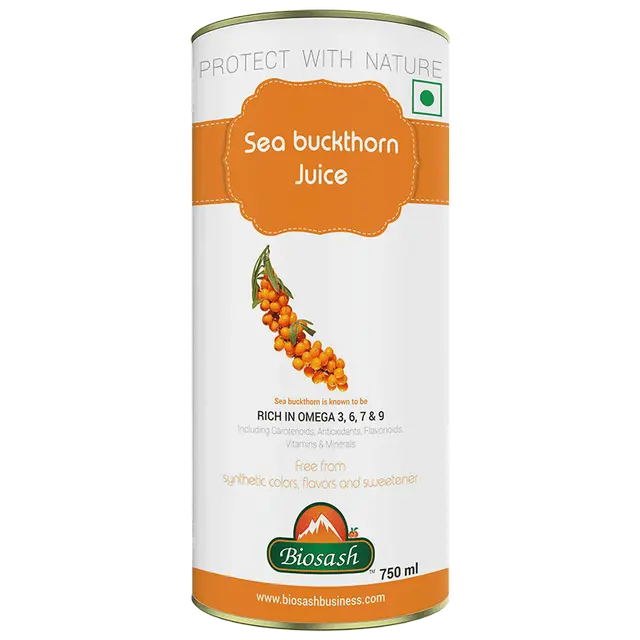
Nutritional Juices
Sea Buckthorn Juice
Cold pressed, 99.9% pulp, no added sugar
₹800 – ₹2,400 Details → -
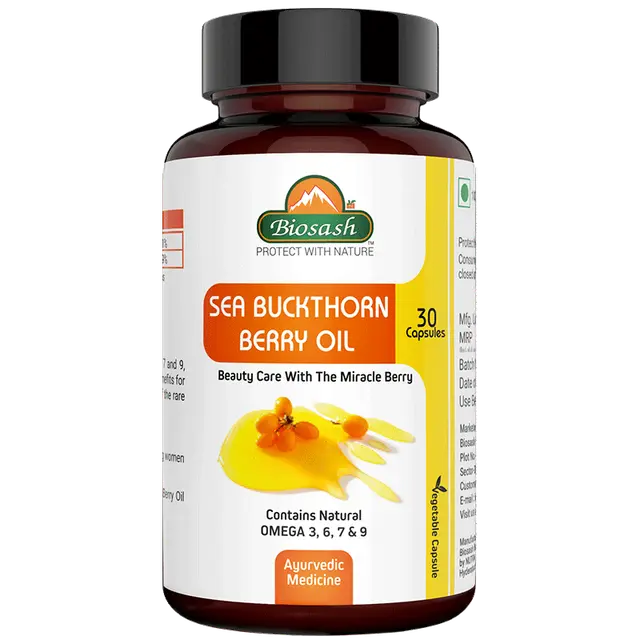
Herbal Supplements & Ayurveda
Sea Buckthorn Berry Oil Capsule
Pulp oil — omega 7 and carotenoids
₹2,715 Details → -
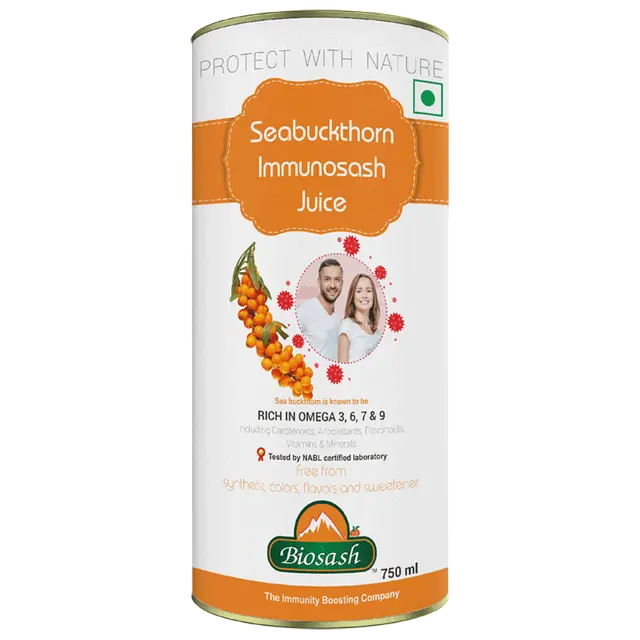
Therapeutic Range
Sea Buckthorn Immunosash Juice
Immunity — berry, seed oil and leaf extract
₹1,800 – ₹4,950 Details → -
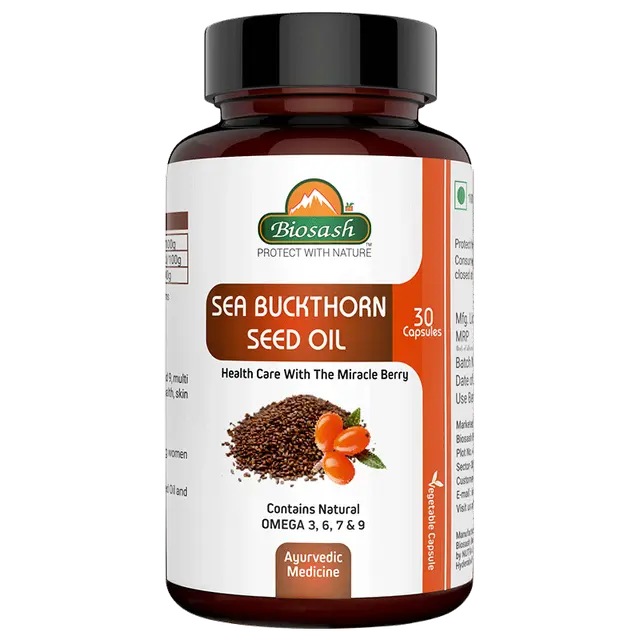
Herbal Supplements & Ayurveda
Sea Buckthorn Seed Oil Capsule
Seed oil — omega 3 and 6, vitamin E
₹2,715 Details → -
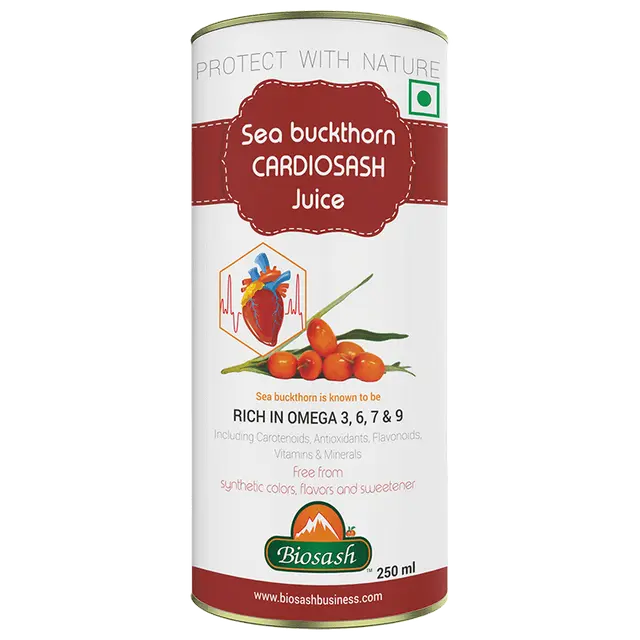
Therapeutic Range
Sea Buckthorn Cardiosash Juice
Heart — with Arjuna bark, guggul and pushkarmool
₹1,687 Details → -
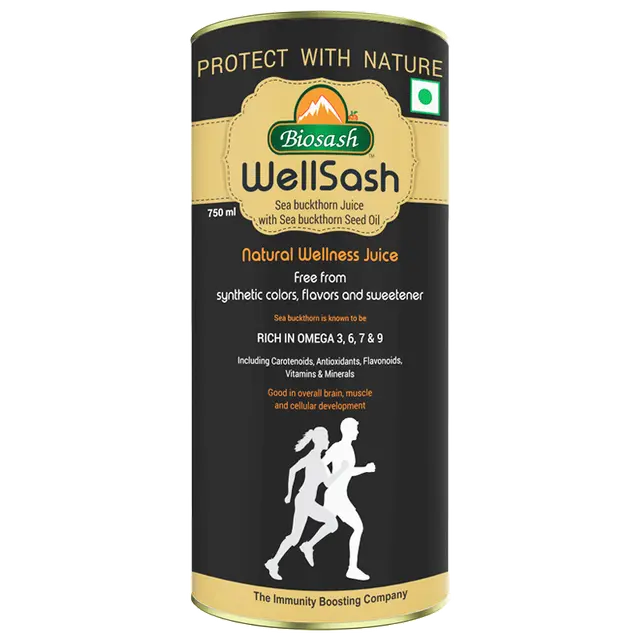
Nutritional Juices
Wellsash Sea Buckthorn Juice
Every part of the sea buckthorn plant – now known as the miracle plant - has historically been used for medicinal purposes.
₹1,585 – ₹4,750 Details → -
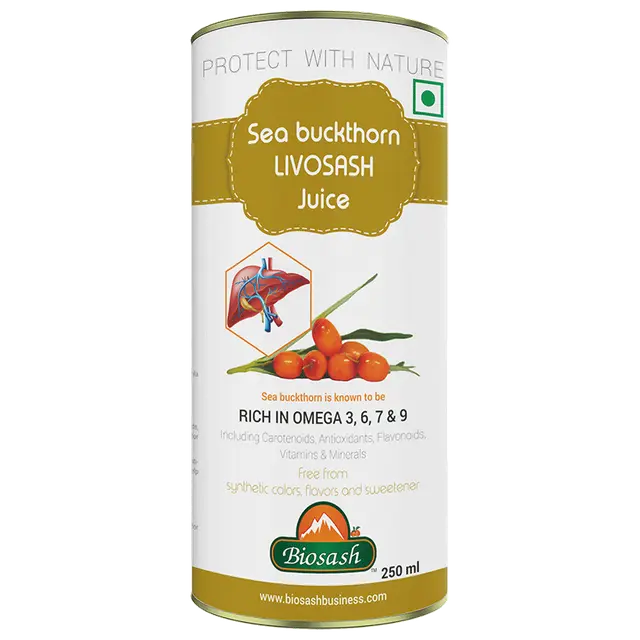
Therapeutic Range
Sea Buckthorn Livosash Juice
Liver support
₹1,800 Details → -
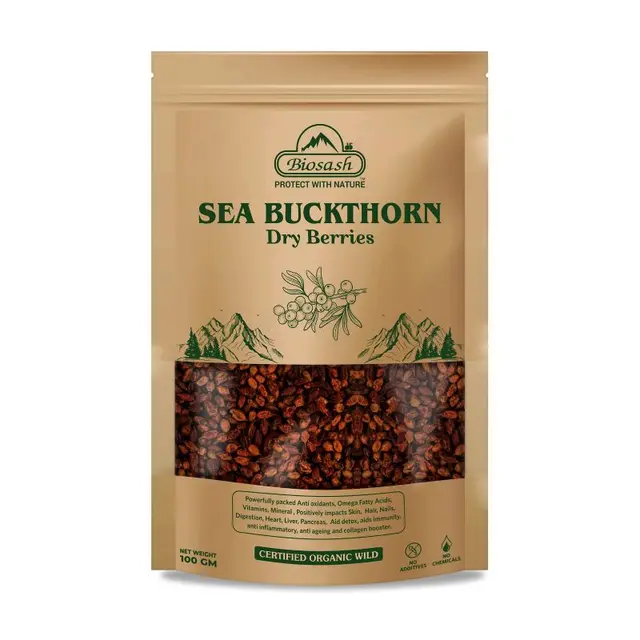
Herbal Supplements & Ayurveda
Sea Buckthorn Dry Berry
Certified Organic Wild Sea Buckthorn Dry Berries
₹299 Details → -
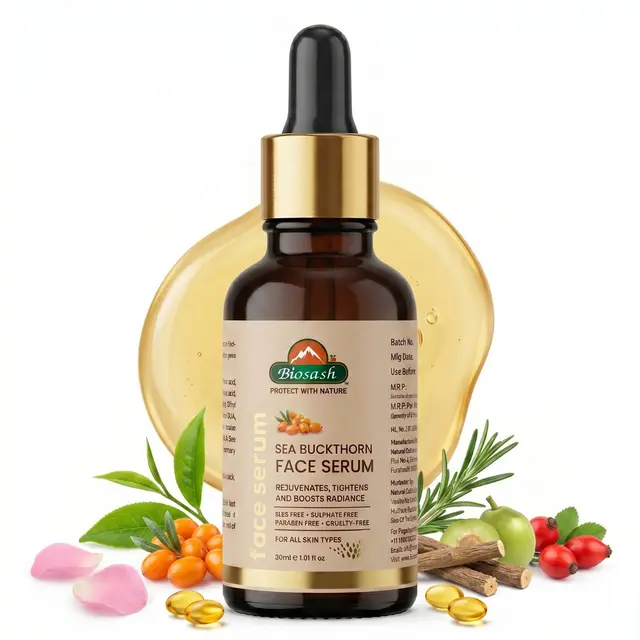
Facial Serums & Gels
Seabuckthorn Face Serum
Targeted skin renewal for firmer, glowing skin.
₹630 Details → -
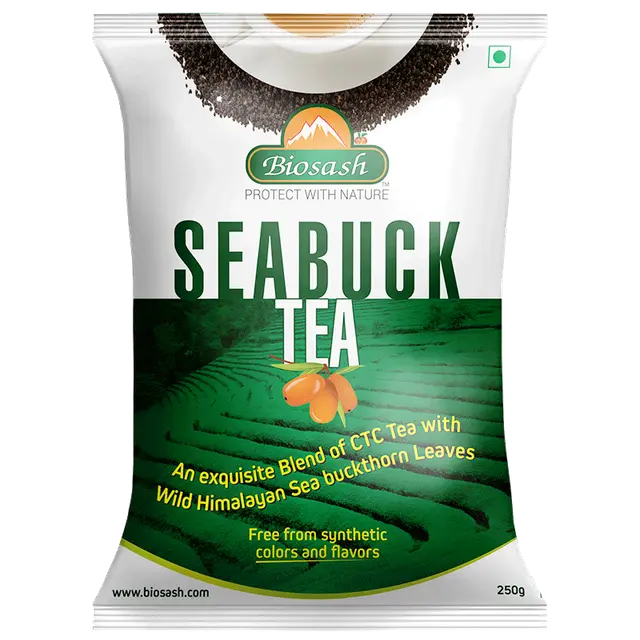
Tea
Seabuck Tea
We’re not only brewing good tea, We’re brewing good health.
₹225 Details →