Hippophae rhamnoides · the Ladakh berry
The complete guide to sea buckthorn
A thorny shrub that survives at 12,000 feet produces a small orange berry with an unusual nutritional profile — including omega 7, which almost nothing else in the plant world carries in quantity.
This site explains what the berry is, what is actually in it, and how the 76 Biosash products made from it differ from one another.
Start here
A berry that had to earn its reputation the slow way
Sea buckthorn was never a commercial fruit. It is too sour to eat raw, the branches are covered in thorns, and it grows where almost nothing else will — cold, dry, high-altitude riverbeds across Ladakh, Lahaul-Spiti and the Tibetan plateau.
What kept it in use for centuries was everything except the taste. Tibetan and Mongolian medical traditions recorded it. Soviet researchers studied it closely from the 1940s onward. In India, defence research at Leh put it in front of soldiers posted at altitude. It became a commercial product in India only after 2005, when the first processing plant opened in Leh.
What the plant actually isThe range
Three ways the berry is sold
Biosash makes 76 products from sea buckthorn and allied Ayurvedic herbs. They divide cleanly, and knowing which group you want removes most of the confusion.
The plain berry
Cold-pressed juice, berry and seed oil capsules, dried berries, leaves, powder, tea and jam. Nothing added — this is sea buckthorn on its own.
See the plain range →The formulated range
Sea buckthorn combined with specific Ayurvedic herbs and aimed at one area of health — heart, liver, digestion, immunity, joints, sleep, iron.
See the formulations →Skin and hair
The berry oil applied rather than swallowed: creams, serums, face and body care, shampoo, soaps and hair oil.
See skin & hair →Explore
What is actually in it
One berry, eight things worth naming. Drag it, then pick one — every figure is from Biosash's own lab panel for the plain juice.
Drag to turn it
190+compounds identified in the berry
Pick one
Sea buckthorn is the only common fruit carrying all four omega fatty acids, and one of very few plants with omega 7 in any quantity. Choose a compound to see how much of it a 100 ml serving of the plain juice holds.
2072.14 mgper 100 ml of juice
Omega 7
Palmitoleic acid, and the reason people look this berry up. Rare in plants — macadamia is the other example usually named. It is a natural component of human sebum, which is why this oil suits skin.
1683.57 mgper 100 ml of juice
Omega 9
Oleic acid — the monounsaturated fat olive oil is known for. The berry carries more of it than of omega 3 and omega 6 put together.
423.16 mgper 100 ml of juice
Omega 6
Linoleic acid. Essential, meaning the body cannot make it. In the seed oil it sits close to 1:1 with omega 3, which is an unusual balance.
102.04 mgper 100 ml of juice
Omega 3
Alpha-linolenic acid, the other essential fatty acid. Concentrated in the seed rather than the pulp, so the seed oil carries far more of it than the juice.
35.25 mgper 100 ml of juice
Vitamin C
About the same per 100 ml as orange juice. The fresh berry is considerably higher — that is the figure usually transferred onto a bottle it does not describe.
12.68 mgper 100 ml of juice
Beta carotene
What makes the berry and its oil orange. The body converts it to vitamin A as and when it needs it.
2.57 mgper 100 ml of juice
Vitamin E
A fat-soluble antioxidant, mostly as tocopherols — and also what keeps the oil itself from turning rancid quickly.
not on the panel
Flavonoids
Isorhamnetin, quercetin, kaempferol. Not on the panel, because they are hard to state as a single figure — but a large part of why the berry is studied at all.
Figures are the manufacturer's own panel for the plain cold-pressed juice. The formulated juices differ, and each product page carries its own. The full composition →
The range
Where most people start
The plain berry in its various forms, and the two or three formulations people reach for most. Slide through, or browse all 76.
See every product-
Nutritional Juices
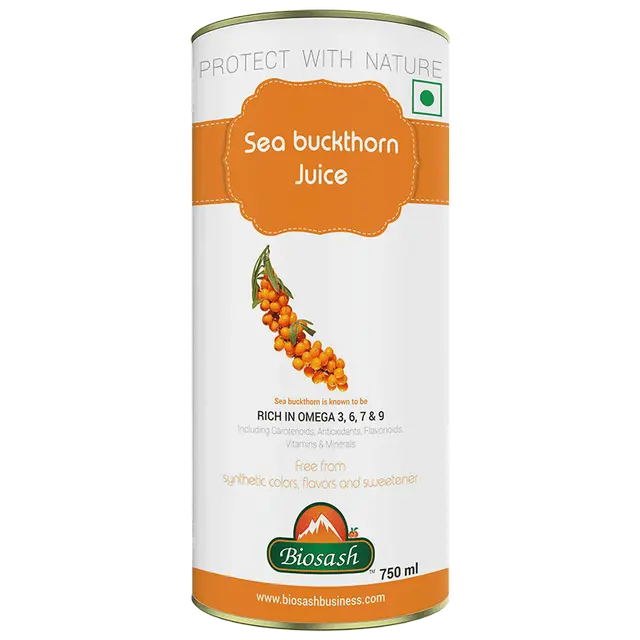
Sea Buckthorn Juice
Cold pressed, 99.9% pulp, no added sugar
₹800 – ₹2,400 Details → -
Herbal Supplements & Ayurveda
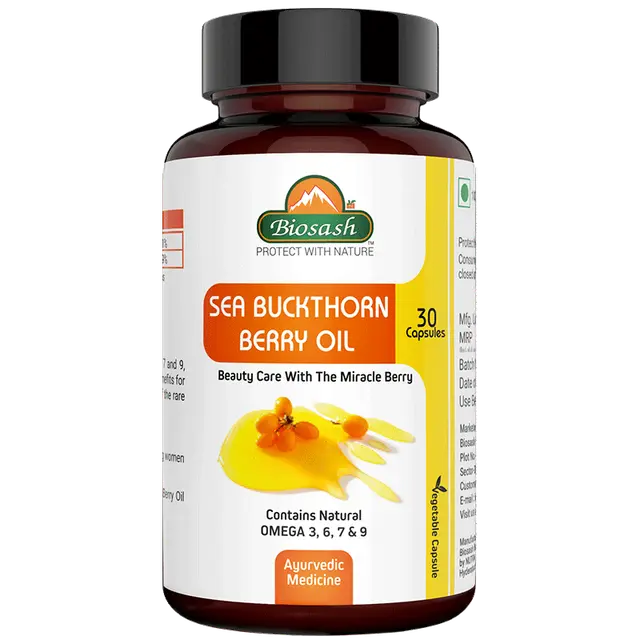
Sea Buckthorn Berry Oil Capsule
Pulp oil — omega 7 and carotenoids
₹2,715 Details → -
Therapeutic Range
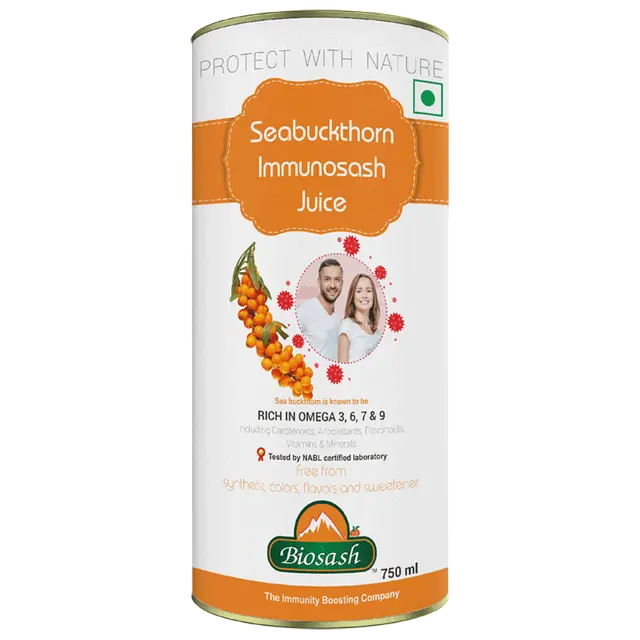
Sea Buckthorn Immunosash Juice
Immunity — berry, seed oil and leaf extract
₹1,800 – ₹4,950 Details → -
Herbal Supplements & Ayurveda
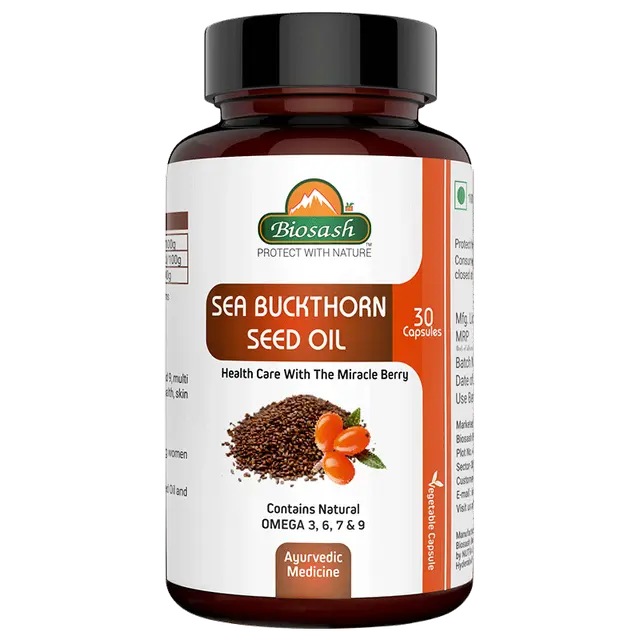
Sea Buckthorn Seed Oil Capsule
Seed oil — omega 3 and 6, vitamin E
₹2,715 Details → -
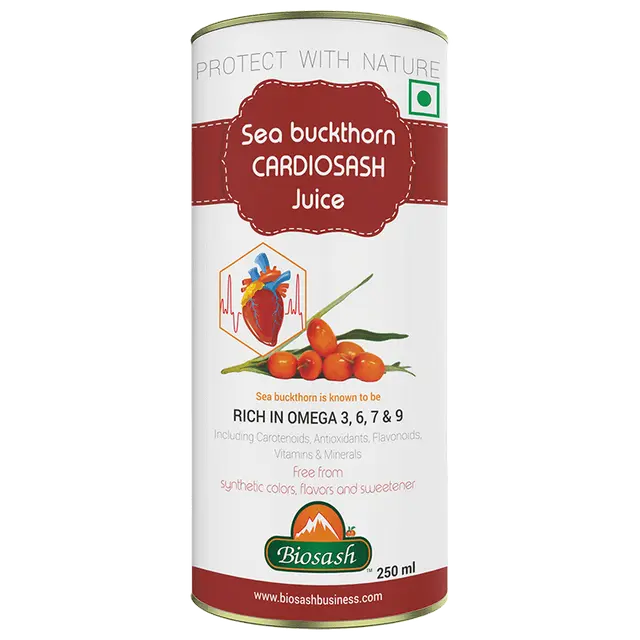
Therapeutic Range
Sea Buckthorn Cardiosash Juice
Heart — with Arjuna bark, guggul and pushkarmool
₹1,687 Details → -
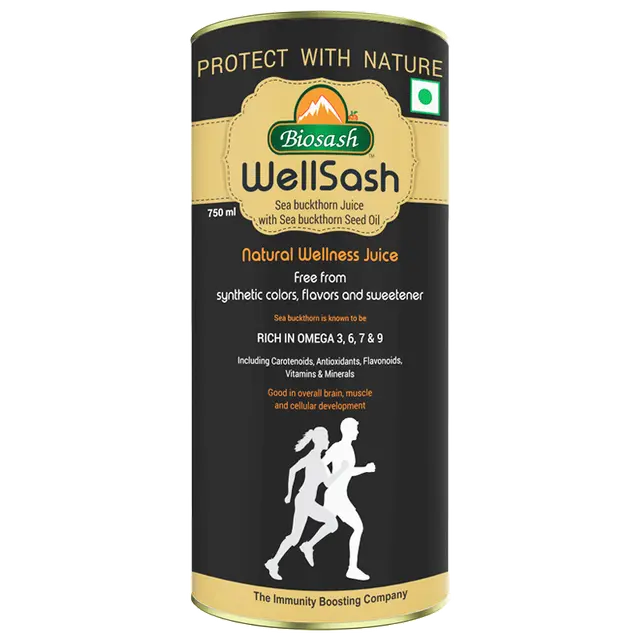
Nutritional Juices
Wellsash Sea Buckthorn Juice
Every part of the sea buckthorn plant – now known as the miracle plant - has historically been used for medicinal purposes.
₹1,585 – ₹4,750 Details → -
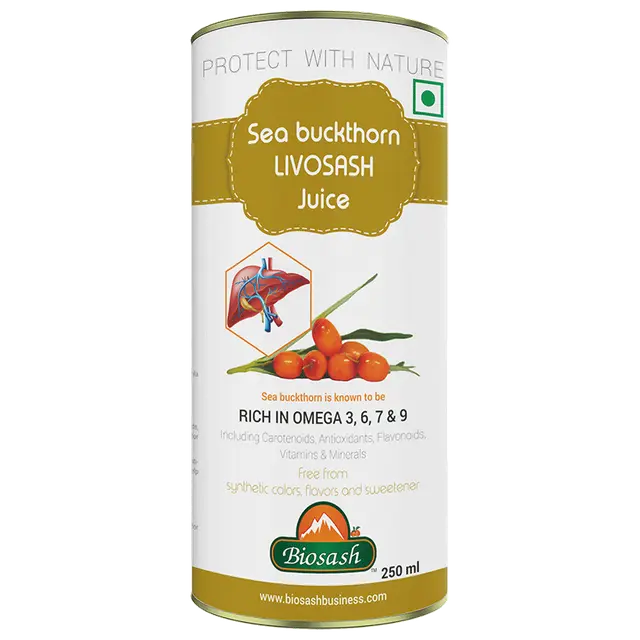
Therapeutic Range
Sea Buckthorn Livosash Juice
Liver support
₹1,800 Details → -
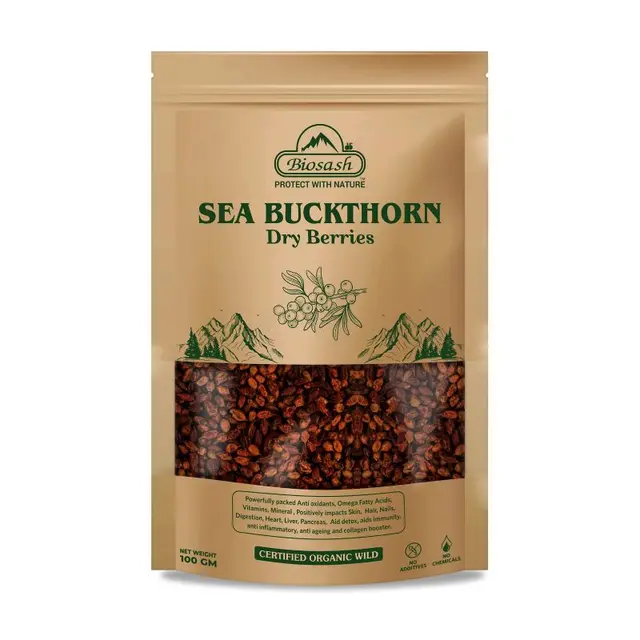
Herbal Supplements & Ayurveda
Sea Buckthorn Dry Berry
Certified Organic Wild Sea Buckthorn Dry Berries
₹299 Details → -
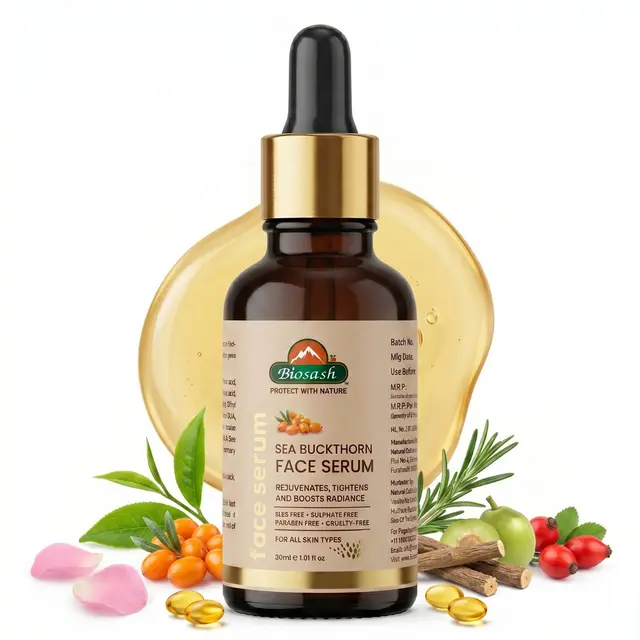
Facial Serums & Gels
Seabuckthorn Face Serum
Targeted skin renewal for firmer, glowing skin.
₹630 Details → -
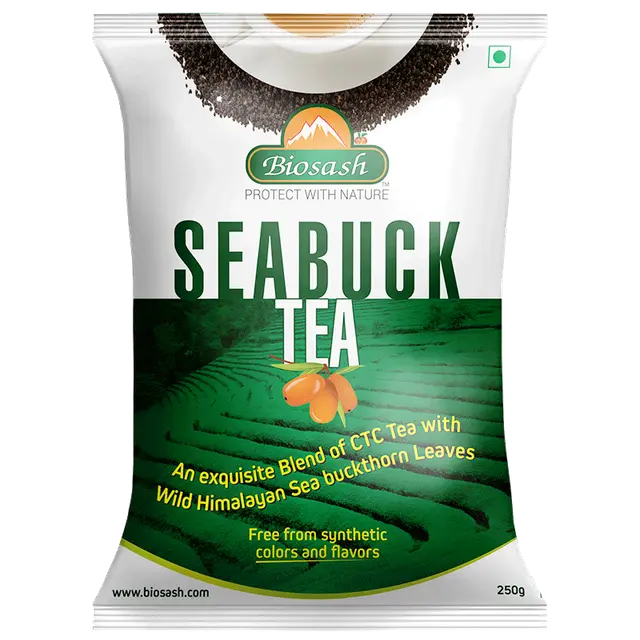
Tea
Seabuck Tea
We’re not only brewing good tea, We’re brewing good health.
₹225 Details →
Where this berry comes from
Every product on this site is made by Biosash Business Pvt. Ltd., which built India's first sea buckthorn processing plant at Leh in 2005. The berries are harvested in Ladakh; the products are made for Biosash at a licensed facility in Himachal Pradesh.