This is an animal study. Preclinical means the work was done in animals, before any testing in people. The figures below describe what happened in that model — they are not effects a person can expect. What preclinical means →
The headline figure
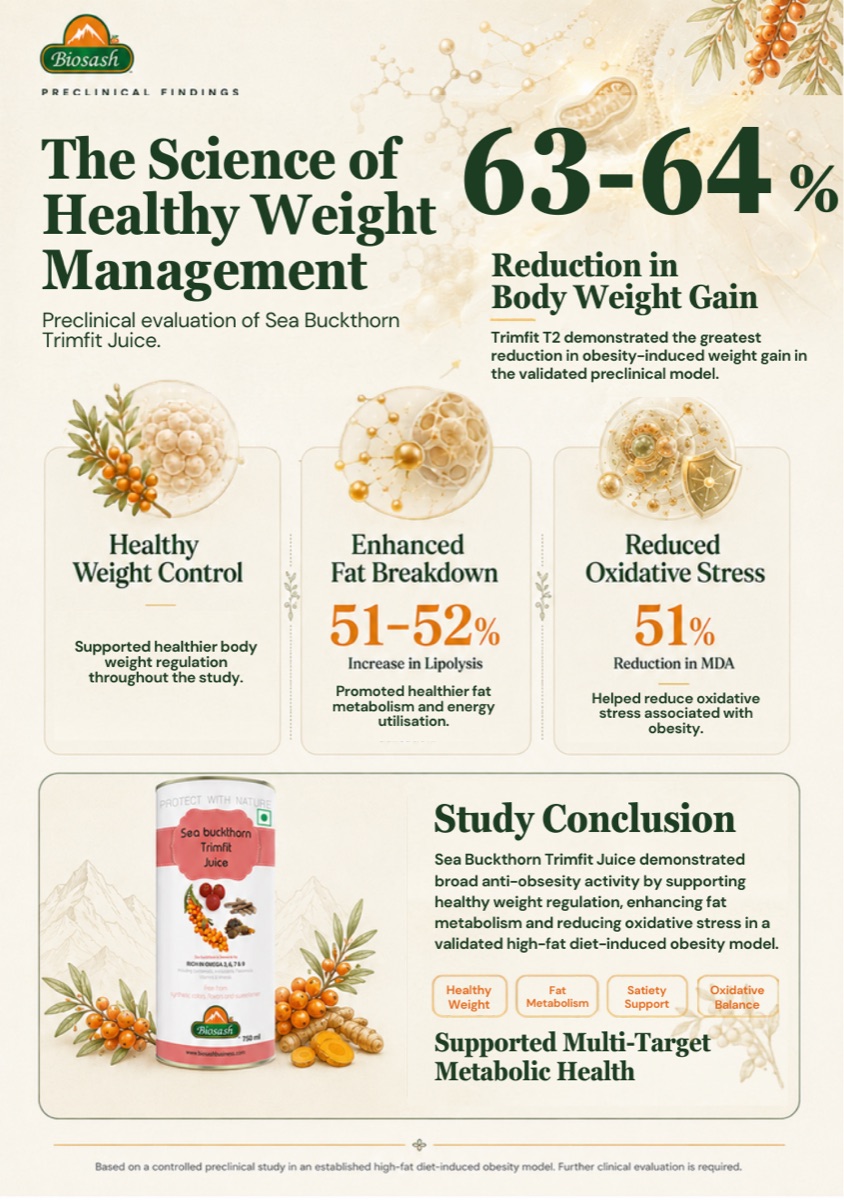
63–64%
reduction in obesity-induced body weight gain.
The model
High-fat diet induced obesity in animals — the standard way to produce measurable diet-driven weight gain and then test against it. The reported figure is for Trimfit T2, the dose that performed best.
What was measured
Feed consumption, body weight, meal-pattern behaviour, lipolysis and oxidative stress markers.
Read this before the numbers. Sea buckthorn is still not a weight-loss agent for people, and this study does not make it one — it measures reduced weight gain in animals on an enforced high-fat diet. What it does do is give the formulation a mechanism worth investigating, which is more than most products in this category have.
The findings
| Reduction in body-weight gain | 63–64% |
| Increase in lipolysis | 51–52% |
| Reduction in MDA | 51% |
How to read them
- Reduction in weight gain — not weight lost. The animals were being fed a high-fat diet throughout; the measure is how much less weight they put on than the untreated group. That distinction matters and the artwork states it.
- Lipolysis — the breakdown of stored fat. An increase means more fat being mobilised for energy.
- MDA — malondialdehyde, a standard marker of oxidative stress. Obesity raises it; a reduction indicates less oxidative damage.
The study's own conclusion
Broad anti-obesity activity by supporting healthy weight regulation, enhancing fat metabolism and reducing oxidative stress in a validated high-fat diet-induced obesity model.
What the study does not say
Worth reading alongside the findings. The published artwork does not state:
- the species and strain used
- how many animals were in each group
- the dose given, and for how long
- which institution ran the work
- whether it has been published or peer-reviewed
That is ordinary for manufacturer-published research and it is not a reason to dismiss the work. It is a reason to call it what it is: internal preclinical evaluation, not independent clinical evidence.
The published artwork
Biosash publishes this study as two images. Everything above is transcribed from them.

The product