This is an animal study. Preclinical means the work was done in animals, before any testing in people. The figures below describe what happened in that model — they are not effects a person can expect. What preclinical means →
The headline figure
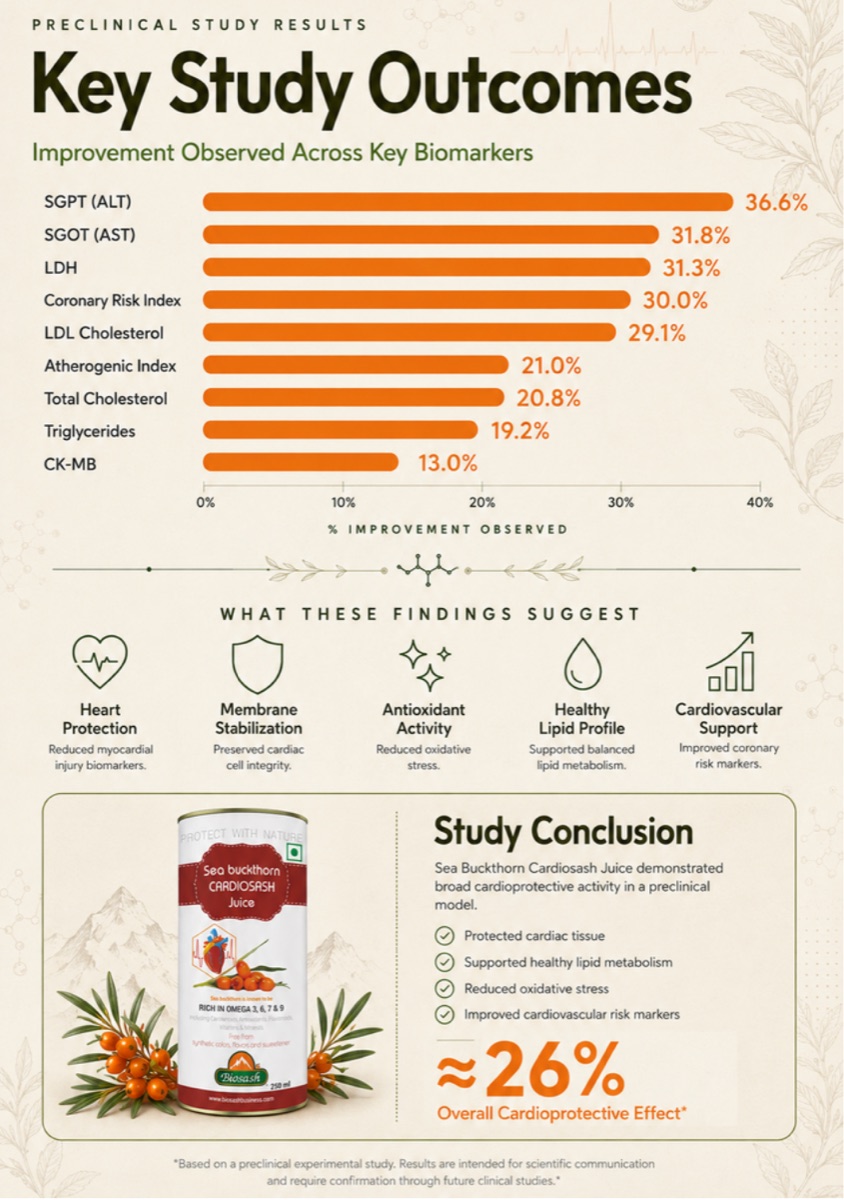
≈26%
overall cardioprotective effect across the measured parameters.
The model
Doxorubicin-induced cardiac damage. Doxorubicin is a widely used anticancer drug whose known drawback is oxidative stress and injury to heart muscle, which makes it a standard way to induce measurable cardiac damage in an animal model and then test whether something reduces it.
What was measured
Whether the juice reduced the biochemical markers of that injury, and what it did to blood lipids alongside.
The findings
| SGPT (ALT) | 36.6% |
| SGOT (AST) | 31.8% |
| LDH | 31.3% |
| Coronary risk index | 30% |
| LDL cholesterol | 29.1% |
| Atherogenic index | 21% |
| Total cholesterol | 20.8% |
| Triglycerides | 19.2% |
| CK-MB | 13% |
How to read them
- SGPT, SGOT, LDH and CK-MB — enzymes that leak into the blood when tissue is damaged. CK-MB in particular is a heart-muscle marker. Lower is better, so a reduction here is the core of the cardioprotective reading.
- Coronary risk index and atherogenic index — ratios calculated from the lipid panel rather than measured directly.
- The lipid figures — LDL, total cholesterol and triglycerides moved together, which is the pattern you would expect if the whole lipid profile shifted rather than one number moving alone.
The study's own conclusion
Broad cardioprotective activity in a preclinical model: protected cardiac tissue, supported healthy lipid metabolism, reduced oxidative stress and improved cardiovascular risk markers.
What the study does not say
Worth reading alongside the findings. The published artwork does not state:
- the species and strain used
- how many animals were in each group
- the dose given, and for how long
- which institution ran the work
- whether it has been published or peer-reviewed
That is ordinary for manufacturer-published research and it is not a reason to dismiss the work. It is a reason to call it what it is: internal preclinical evaluation, not independent clinical evidence.
The published artwork
Biosash publishes this study as two images. Everything above is transcribed from them.

The product