Herbal Supplements & Ayurveda
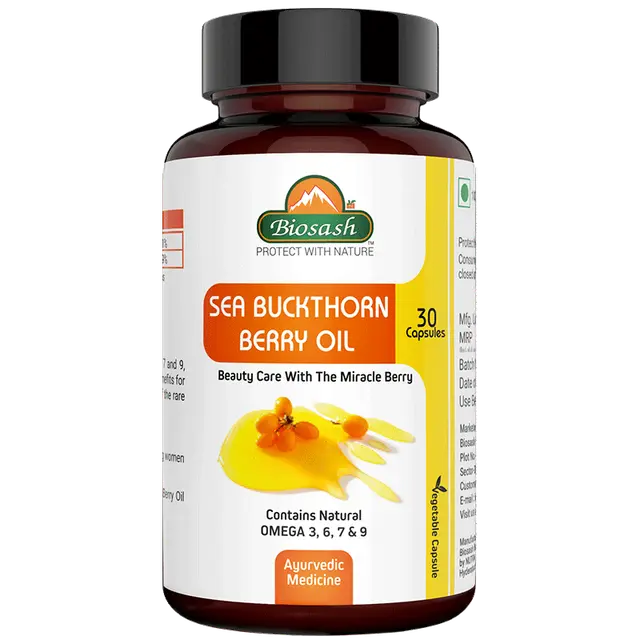
Sea Buckthorn Berry Oil Capsule
Pulp oil — omega 7 and carotenoids
Herbal Supplements & Ayurveda
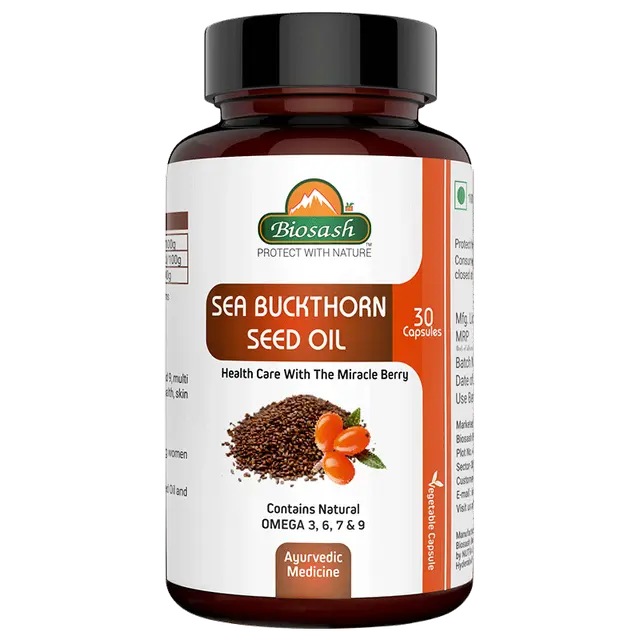
Sea Buckthorn Seed Oil Capsule
Seed oil — omega 3 and 6, vitamin E
The short answer
Berry oil for skin and for omega 7. Seed oil for omega 3 and 6. If you only want one and skin is the reason you are here, berry oil.
Where each comes from
Berry oil — also called pulp or fruit oil — is pressed from the flesh and skin of the fruit. Seed oil is pressed from the small seeds inside it. Both come from the same harvest; they are separated during processing.
What is different
- Omega 7. Concentrated in the pulp. This is the rare one, and it is the reason sea buckthorn is discussed at all in skin contexts — palmitoleic acid is a natural component of human sebum.
- Omega 3 and 6. Concentrated in the seed, at close to a 1:1 ratio, which is unusual and generally considered favourable given how far most modern diets lean towards omega 6.
- Carotenoids. In the pulp. It is why berry oil is deep orange-red and seed oil is pale.
- Vitamin E. Higher in the seed oil.
How to tell which you have been sold
Colour is the usual tell: berry oil is orange-red, seed oil pale gold. Read it as a guide to which oil you have rather than as a test of quality — the depth of colour shifts with the harvest in both, because neither carries added colour.
The thing actually worth checking is the label. A product that says only "sea buckthorn oil" and never specifies pulp or seed is not one to buy blind.
Other comparisons